
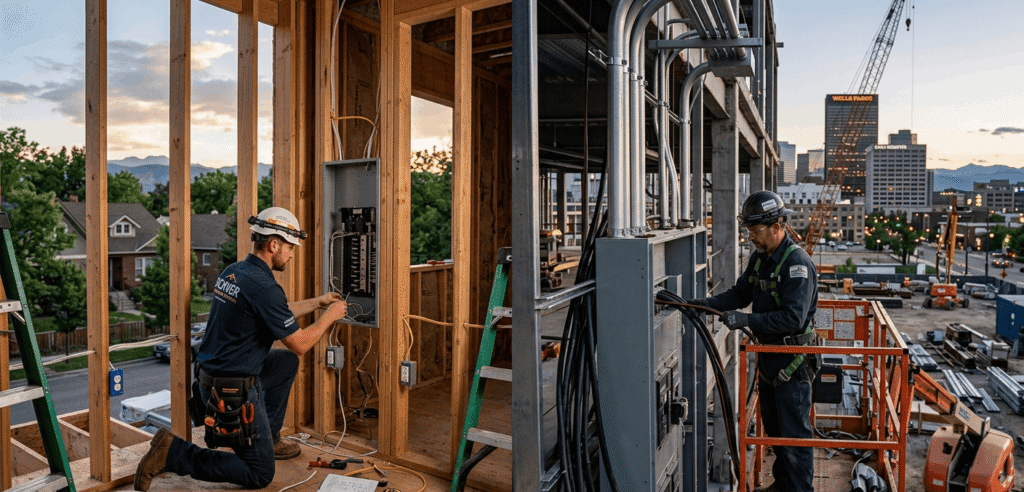
Residential and commercial contractors start with similar training, but their work is quite different. Residential electricians handle wiring homes and working with 120/240V single-phase systems. Commercial contractors, on the other hand, work with more complex 480V networks, three-phase power, and must follow strict safety rules for businesses and multi-tenant buildings.
The main differences are in system complexity, electrical load, and compliance standards. Hiring a qualified electrical contractor in Denver helps property owners get the right system design, secure city permits, and pass inspections.
Why Choosing the Right Type of Electrical Contractor in Denver Matters
As Denver grows, with more commercial areas and established neighborhoods, there is a greater need for specialized electrical services. Residential contractors typically work on homes and small remodels. Commercial contractors handle bigger systems built for constant use and higher electrical loads.
Choosing the right specialist helps your project stay on schedule and meet all rules. Residential electricians are skilled with single-phase 120V to 240V systems. Commercial experts know how to work with three-phase systems, commercial switchgear, and OSHA standards. When you match the contractor’s skills to your project, you get the best system design. Commercial systems often run between 120V and 480V to handle bigger power needs.
What Is a Commercial Electrical Contractor? (And Why Denver Businesses Need One)
A commercial electrical contractor works on electrical systems for offices, stores, warehouses, healthcare buildings, restaurants, and factories. These systems handle bigger electrical loads and run all the time. Commercial buildings often use three-phase systems from 120V to 480V to power things like HVAC, machines, lighting, and equipment.
As Denver’s commercial sector grows, more experienced contractors are needed. The metro area is expected to reach about 3.6 million people by 2030, which means more offices, tenant upgrades, and infrastructure projects. Commercial contractors must follow NEC rules, OSHA regulations, and local permit requirements in Denver or Jefferson County.
Commercial electrical services commonly include:
- Design‑Build Services: Planning and installing electrical systems for commercial construction.
- Tenant Improvements: Modifying electrical layouts for offices and retail spaces.
- Panel and Switchgear Installation: Managing larger electrical distribution systems.
- Motor Controls: Wiring and maintaining industrial motors and automation systems.
- Lighting Retrofits: Upgrading lighting systems for efficiency and compliance.
- Backup Power Systems: Installing generators and emergency power systems.
- Energize Denver Compliance: Supporting benchmarking and building performance upgrades.
These services help businesses stay reliable and meet code requirements. Property owners can talk to MV Power Solutions to find out how professional electrical contractors keep restaurants and commercial buildings running smoothly for the long term.
5 Key Differences Between Residential and Commercial Electrical Contractors in Denver
Residential and commercial electrical work are very different in size, setup, and rules. Knowing these differences helps property owners pick the right electrical contractor in Denver.
| Factor | Residential Electrical Contractor | Commercial Electrical Contractor |
| Voltage and System Type | Single-phase, 120V–240V | Three-phase, 120V–480V |
| Project Scale | Homes, apartments, small renovations | Offices, warehouses, retail, industrial |
| Code and Compliance | NEC residential sections, local permits | NEC commercial, OSHA, ADA, Energize Denver |
| Equipment Used | Thin-gauge cable, standard breakers | Heavy conduit, transformers, switchgear, generators |
| Training and Licensing | Apprentice → journeyman → master (residential track) | Additional commercial certifications, 4,000+ hrs OJT |
| Maintenance Complexity | Routine; less frequent failures | Ongoing contracts; higher failure rate, critical uptime |
Denver‑Specific Licensing and Code Requirements to Know
In Colorado, residential and commercial electrical licenses are handled separately. Contractors need the right state-issued license for the work they do. Commercial licenses usually require more advanced training because the systems are bigger and more complex.
The Denver Building & Safety Division requires permits for most electrical work except minor repairs. Contractors must handle permit applications, inspections, and make sure the project follows all codes.
Commercial property owners should also understand the requirements of Energize Denver. The benchmarking ordinance applies to commercial and multifamily buildings larger than 25,000 square feet and requires ongoing tracking of energy performance. OSHA 29 CFR 1910 regulations also apply to commercial and industrial workplaces.
Conclusion
Denver’s electrical rules require the right skills. Whether you are updating a home in Washington Park or working on a warehouse near DIA, hiring a specialist keeps your project safe, efficient, and up to code. MV Power Solutions offers expert electrical services for all types of commercial projects. We make sure every job meets top safety standards and follows all regulations. Choose a licensed Denver electrician to power every part of your commercial project safely.
FAQs
Can the same contractor do both residential and commercial work?
Contractors with both state-issued licenses can work on both types of properties. Property owners should verify that their contractor has the proper credentials to handle the system’s load capacity to ensure the project goes smoothly.
Do I need a permit for electrical work in Denver?
Yes. The Denver Building & Safety Division requires permits for major upgrades, rewiring, and commercial work. Getting these permits ensures every change meets the National Electrical Code and safety standards.
What makes commercial electrical work more expensive than residential?
Commercial projects use complex three-phase power systems, heavy conduit, and advanced switchgear. These larger jobs require skilled workers, additional safety certifications, thorough inspections, and detailed planning to meet higher energy demands.