
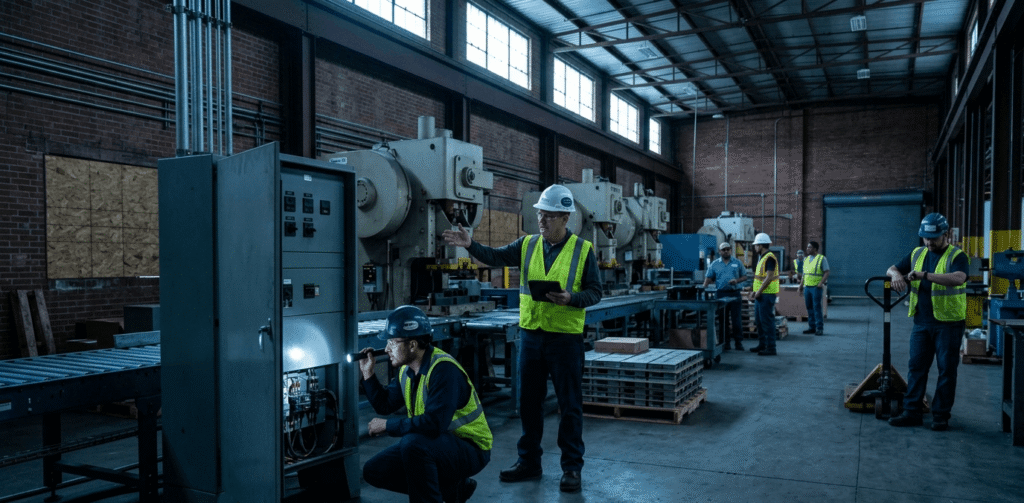
Electrical downtime in Colorado’s industrial sector causes more problems than just emergency repair costs. For a heavy manufacturing or assembly plant in Denver, even one power outage can lead to spoiled materials, wasted labor hours, and missed supply chain deadlines.
Denver’s temperature fluctuations and seasonal weather extremes, common to the Front Range, place additional physical stress on infrastructure, making sudden system failures a constant threat to strict production schedules. Securing these complex systems requires the specialized technical expertise of an experienced industrial electrical contractor in Denver to maintain regulatory compliance and ensure continuous facility output.
What Is Electrical Downtime and Why Are Denver Industrial Facilities Especially Vulnerable?
Electrical downtime happens when an electrical failure stops industrial operations, either partly or completely. Outages can last from a few minutes to several days, depending on how serious the problem is and how long repairs take. Downtime can impact automation, refrigeration, conveyors, PLCs, and high-voltage systems. Many manufacturing facilities deal with unplanned downtime several times a month.
Local industries such as food and beverage, oil and gas, and pharmaceuticals operate within strict production windows tied to contractual deadlines. Unplanned outages have a significantly greater operational impact than planned maintenance because indirect losses persist long after systems restart.
The Full Spectrum of Downtime Costs: Beyond the Repair Bill
Electrical downtime causes problems in many areas, not just during repairs. Facilities often face production delays, wasted labor, and regulatory issues that persist even after power is restored.
The main types of impacts are:
1. Lost Production Output
Each hour of downtime lowers production and creates a backlog. Facilities that run nonstop are hit hardest because they rely on steady workflows.
Expected results include:
- Units Not Produced: Manufacturing targets immediately fall behind.
- Shift Catch‑Up Requirements: Teams may require additional production cycles to recover lost output.
- Overtime Pressure: Extra labor hours often become necessary to restore schedules.
The longer the outage lasts, the harder it is to catch up on lost production.
2. Idle Labor Costs
Industrial facilities still have to pay employees during outages, even if no work gets done. Workers may stay on-site while waiting for systems to restart. Large Denver facilities with multiple shifts face even more disruption because downtime affects several teams at once.
3. Perishable Inventory Loss
Denver food processing, pharmaceutical, and biopharma facilities often rely on temperature‑controlled environments and uninterrupted power systems.
Typical risks include:
- Refrigeration Failure: Temperature instability can damage inventory.
- Contamination Exposure: Controlled‑environment interruptions increase the risk of quality issues.
- Regulatory Re‑Testing: Additional validation may be required before operations resume.
Entire production batches may become unusable after prolonged outages.
4. Emergency Repair Premiums
Emergency electrical response work consistently creates greater operational strain than planned maintenance.
Common emergency repair challenges include:
- After‑Hours Labor: Emergency response rates are structured differently from scheduled work.
- Expedited Parts Sourcing: Critical components may require rush logistics coordination.
- Specialty Equipment Delays: Industrial systems often depend on parts with longer lead times.
Working closely with an industrial electrical contractor in Denver minimizes these reactive logistical hurdles. The operational burden of reactive repairs remains significantly higher than that of preventive maintenance planning.
5. Contractual Penalties and Missed Delivery Commitments
Many industrial facilities operate under strict delivery schedules tied to supplier agreements or customer contracts.
Electrical downtime can trigger:
- Missed Shipments: Delayed production affects downstream timelines.
- Contract Reviews: Clients may reassess operational reliability.
- Future Business Risk: Repeated outages can weaken long‑term partnerships.
Even short disruptions may affect customer confidence.
6. Compliance and Safety Incidents
Electrical failures, arc faults, or fires can create immediate safety risks, lead to OSHA investigations, and cause regulatory problems in industrial settings.
Common risks are:
- OSHA 1910 Exposure: Safety violations may result from uncontrolled outages.
- NFPA 70E Compliance Gaps: Arc flash risks increase during emergency response.
- Operational Suspension: Equipment lockout procedures may delay recovery.
Compliance issues can continue even after repairs are finished.
7. Long‑Term Reputational Damage
Repeated downtime can affect how customers, suppliers, and partners view a facility’s reliability. Long‑term impacts often include reduced customer trust, strained supplier relationships, and increased competitive pressure. This erosion of stakeholder confidence reflects how visible operational downtime becomes at scale, directly threatening a facility’s long‑term market position.
Downtime Cost by Industry Type: A Denver Industrial Snapshot
Different industries experience different levels of operational exposure during electrical outages. Production sensitivity, automation reliance, and compliance obligations all influence the overall impact.
| Industry | Primary Downtime Risk | Production Impact Scale | Compliance Risk |
| Food and Beverage | Refrigeration failure, batch spoilage | Very High | FDA, HACCP |
| Oil and Gas / Energy | Arc fault, high-voltage failure, SCADA outage | Very High | OSHA 1910, EPA |
| Pharmaceutical / Biopharma | Cleanroom power loss, contamination event | Extremely High | FDA cGMP, OSHA |
| Manufacturing / Logistics | Motor/PLC failure, conveyor shutdown | High | OSHA 1910 |
| Water and Wastewater | Pump/SCADA failure, regulatory non-compliance | High | EPA, CDPHE Denver |
The Compounding Effect: How Short Outages Become Long‑Term Problems
Electrical downtime usually doesn’t end as soon as the power comes back. Industrial systems often need step-by-step restarts, recalibration, and quality checks before production is back to normal. Automated systems and PLCs may need extra testing, so recovery keeps using up time even after the outage.
When the supply chain is disrupted, it puts more pressure on operations. If one Denver facility shuts down, it can quickly impact manufacturers, distributors, and OEM partners. Insurance issues can also come up later. Facilities with frequent downtime or poor maintenance records may face more questions from insurers in the future.
How an Industrial Electrical Contractor in Denver Reduces Downtime Risk
To prevent downtime, facilities need proactive maintenance and specialized industrial know-how. An experienced service provider can spot problems before they turn into bigger issues. Industrial electrical systems are more complex than those in regular commercial buildings and need expert attention.
A qualified industrial team typically supports downtime reduction through services such as:
- Monthly Panel Inspections: Identify overheating connections and component wear early.
- Quarterly Thermal Imaging: Detects abnormal heat signatures before equipment failure occurs.
- Emergency Response: Accelerate fault isolation and restoration during outages.
- Industrial System Expertise: Support PLCs, motor controls, and high‑voltage switchgear.
- Compliance Documentation: Maintain NFPA 70E labeling and OSHA‑ready records.
- Dedicated Account Management: Improve operational familiarity and response efficiency.
- Annual Electrical Audits: Full-system assessments help identify long-term infrastructure vulnerabilities and compliance risks.
Taking these preventive steps helps industrial facilities avoid disruptions and keep their electrical systems reliable.
Secure Your Operational Continuity
Unplanned outages can hurt your production, compliance, and profits. MV Power Solutions offers specialized electrical contracting services to help businesses in Denver and nearby areas reduce these risks.
Our experienced contractors check your current systems, upgrade electrical setups for growing businesses, and build new industrial systems from scratch. Set up regular thermal imaging, panel checks, and system audits to keep your facility safe from unexpected problems.
FAQs
What are the most common causes of electrical downtime in Denver industrial facilities?
Equipment failure is consistently cited as one of the leading causes of unplanned industrial downtime. Additional primary factors include aging infrastructure, power surges, thermal stress, arc faults, and routine maintenance errors.
How does emergency electrical repair compare to planned maintenance in terms of cost?
Emergency repairs are substantially more costly due to after‑hours labor rates, expedited sourcing of parts, and extended operational disruptions. Scheduled maintenance offers superior budget predictability and helps avoid unplanned expenses.
Does my Denver industrial facility need a dedicated industrial electrical contractor, or can I use any commercial electrician?
Industrial systems require specialized expertise for PLCs, automation, and high‑voltage gear. A dedicated industrial team ensures the necessary technical certifications, regulatory compliance, and maximum system reliability.